
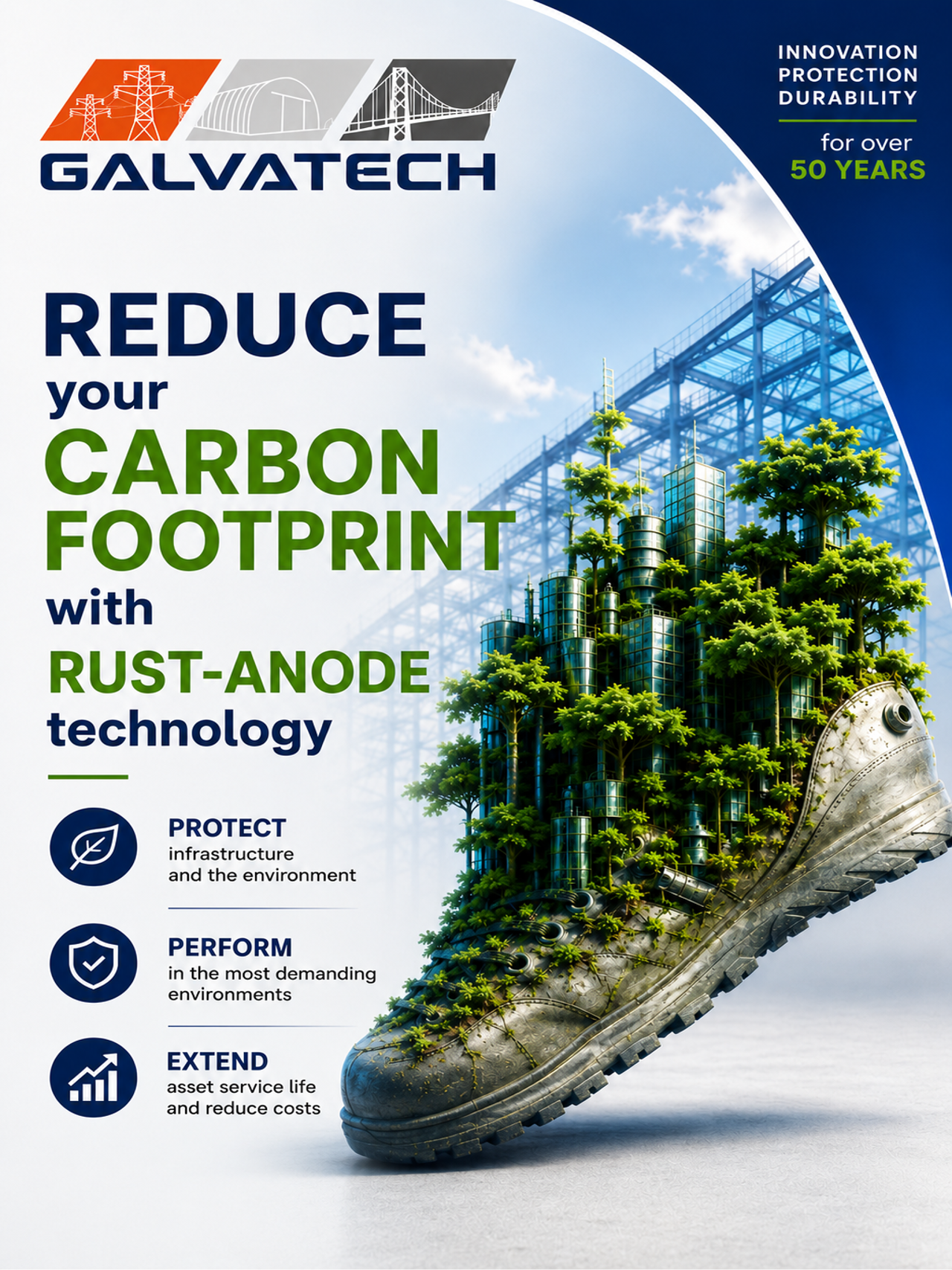

Reducing the Carbon Footprint of Infrastructure Through Better Corrosion Protection Strategies
Infrastructure sustainability starts long before an asset reaches the end of its service life
When discussing carbon reduction in the infrastructure sector, attention often focuses on energy efficiency, recycled materials and construction emissions.
But another factor deserves greater consideration:
the service life of metallic assets and the corrosion protection strategy used to protect them.
Every maintenance operation can require new materials, transportation, surface preparation, coating application, equipment and waste management.
In other words, every maintenance cycle has its own environmental footprint.
This is why Galvatech has developed an approach to compare the carbon footprint of different corrosion protection strategies over their life cycle.
Carbon footprint goes beyond the coating itself
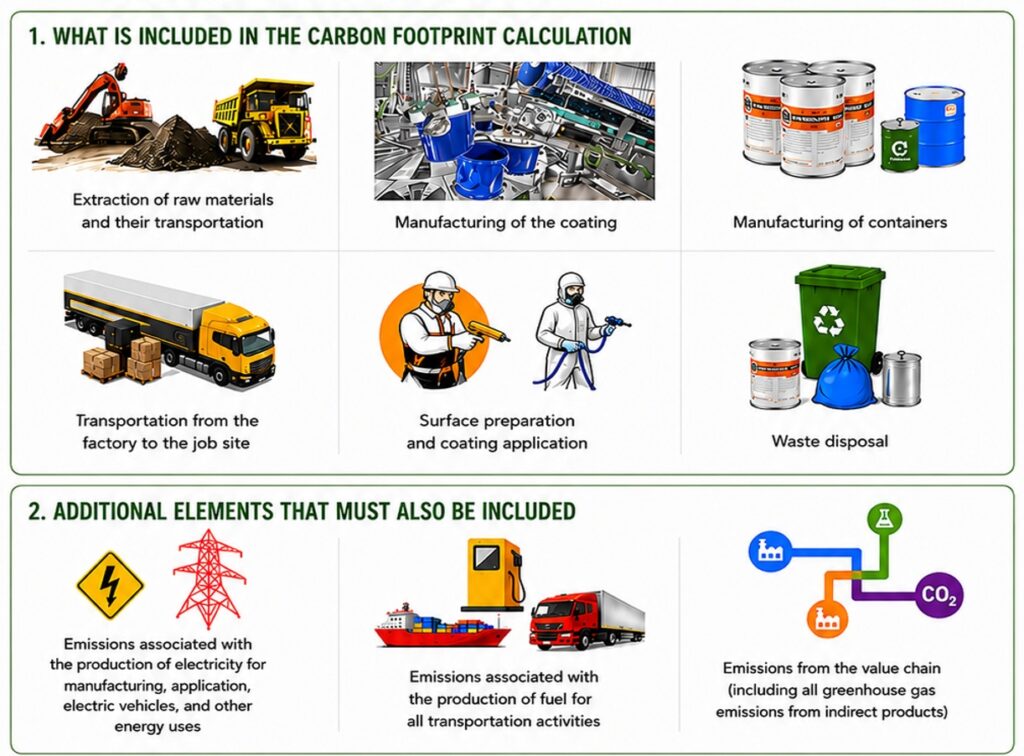
A meaningful environmental comparison should consider much more than the quantity of coating applied.
The methodology presented by Galvatech considers elements such as:
The objective is to compare protection systems on a functional basis over a defined service period — rather than simply comparing the initial quantity or cost of a product.
Rust-Anode: longer protection, fewer interventions
Rust-Anode Primer uses zinc-based cathodic protection.
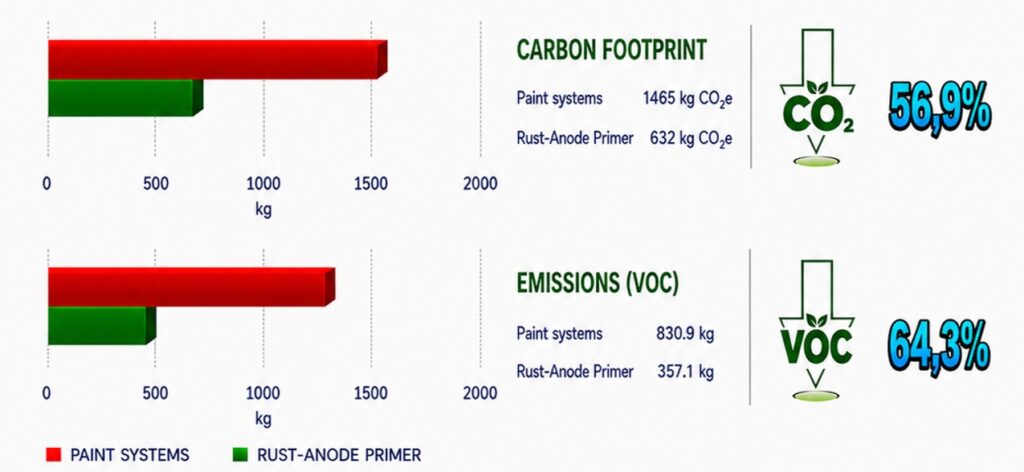
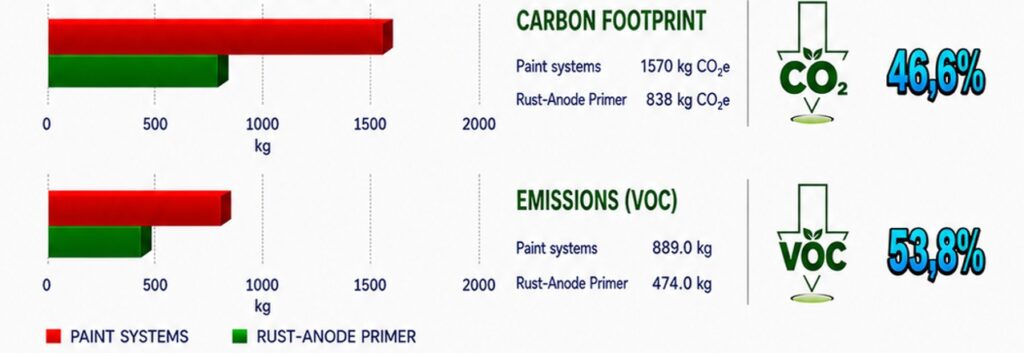
According to the scenarios presented in the study, this technology can significantly reduce the carbon footprint compared with conventional coating systems.
For the C3 (90% of projects) environment scenario:
For the C5 environment scenario:
These figures are specific to the study’s assumptions and scenarios and should not be interpreted as universal reductions applicable to all projects.
The real issue is the life cycle
A corrosion protection system should not be evaluated solely on its initial cost.
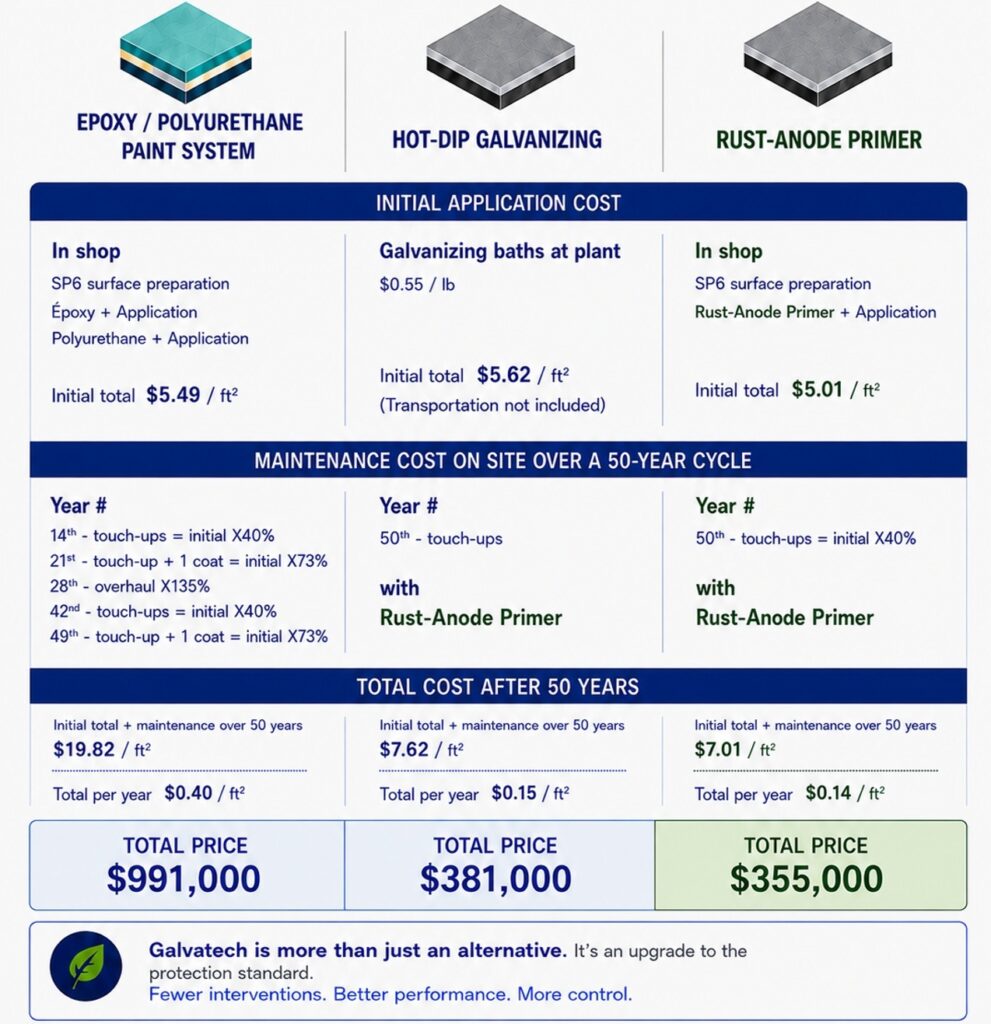
For example, the brochure presents a 50-year scenario for 50,000 ft² of steel in a C3 environment.
The initial costs are relatively close.
The difference becomes much more significant when maintenance and interventions over the 50-year period are considered.
This illustrates an important principle:
Initial cost is only one part of the equation.
Maintenance frequency, service life, surface preparation, material consumption, and field operations can all significantly affect a corrosion protection strategy’s economic and environmental performance.
Fewer interventions can mean fewer resources consumed
The concept is straightforward:
Less corrosion
↓
Longer protection
↓
Fewer interventions
↓
Less surface preparation
↓
Less material, transportation and waste
↓
Lower associated emissions
Corrosion protection therefore becomes an important component of a broader infrastructure sustainability strategy.
The question is no longer simply:
“Which coating should we use?”
It becomes:
“Which protection strategy provides the required performance over the intended service life with the lowest overall impact?”
Performance. Durability. Economics. Environment.
At Galvatech, we believe corrosion protection should be evaluated from several perspectives:
Performance — protection in demanding environments.
Durability — extending the service life of infrastructure.
Economics — reducing maintenance requirements and life-cycle costs.
Environment — reducing material consumption, waste and emissions associated with maintenance.
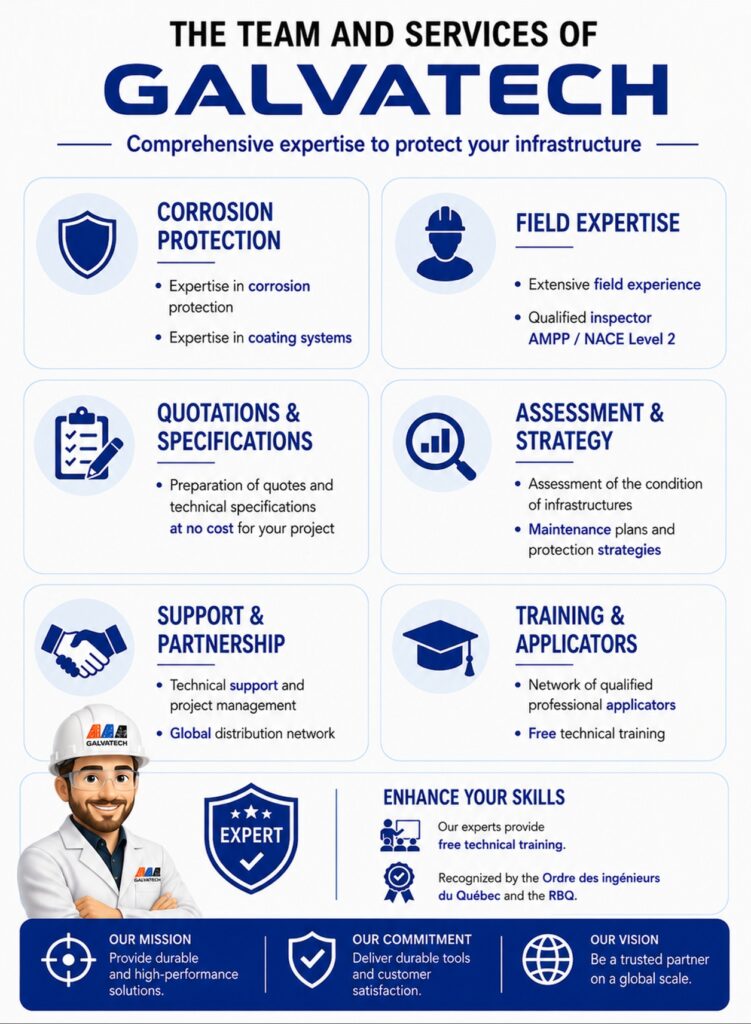
Galvatech also provides technical specifications, infrastructure assessments, maintenance strategies, project support and technical training for professional applicators.
What if one of the most effective ways to reduce infrastructure emissions is simply to make infrastructure last longer?
Sustainable infrastructure does not always require replacing existing materials with new ones.
It can also mean protecting those materials better and extending their useful life.
Protect. Extend. Reduce interventions.
That is the approach behind Rust-Anode technology.
Galvatech — Protection that lasts.