Galvanic corrosion is a phenomenon that occurs when two dissimilar metals are in direct electrical contact and are also exposed to an electrolyte, such as water or saline solution. The pair’s more reactive (or less noble) metal becomes the anode and begins to corrode, while the more noble metal becomes the cathode and does not […]

Galvatech wishes to celebrate the 1st professional anniversary of François Bellefeur, Technical Director Canada. You are an asset to our team and to the entire organization. Your efforts do not go unnoticed. Happy first year and many more to come! On behalf of Guylaine and the entire Galvatech team.
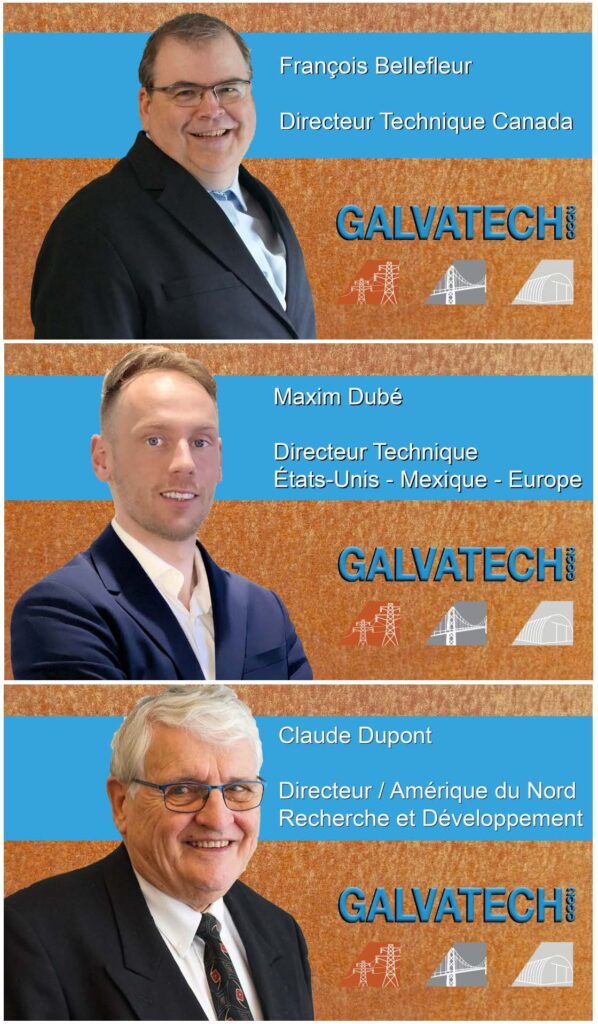
With the growing development of foreign markets, we wish to inform you of organizational changes within our team. Galvatech 2000 is pleased to announce the following nominations effective January 01, 2023: Francois Bellefleur is now on Technical Director of Canada. You can reach him by Cell / WhatsApp at 1-438-500-4438 or by email at francoisbellefleur@galvatech2000.com Francois has […]
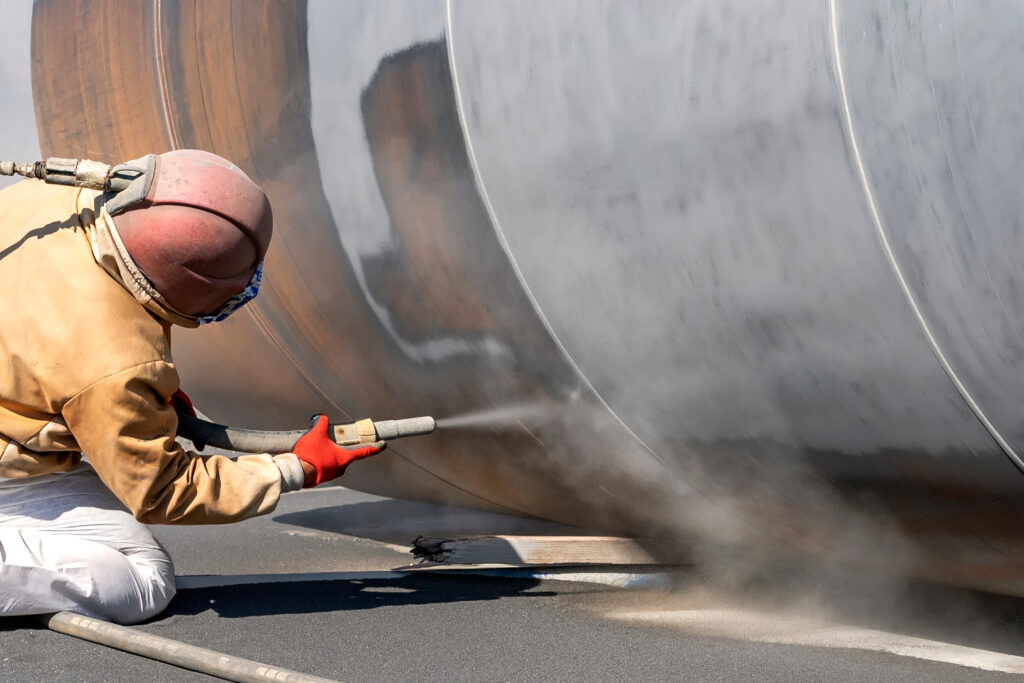
NACE (National Association of Corrosion Engineers) and SSPC (The Society for Protective Coatings) are two professional organizations focused on the protection of materials from corrosion and degradation. Both organizations are recognized authorities in the field and provide education, training, and certification programs for individuals involved in the protection of materials. To create a unified voice […]
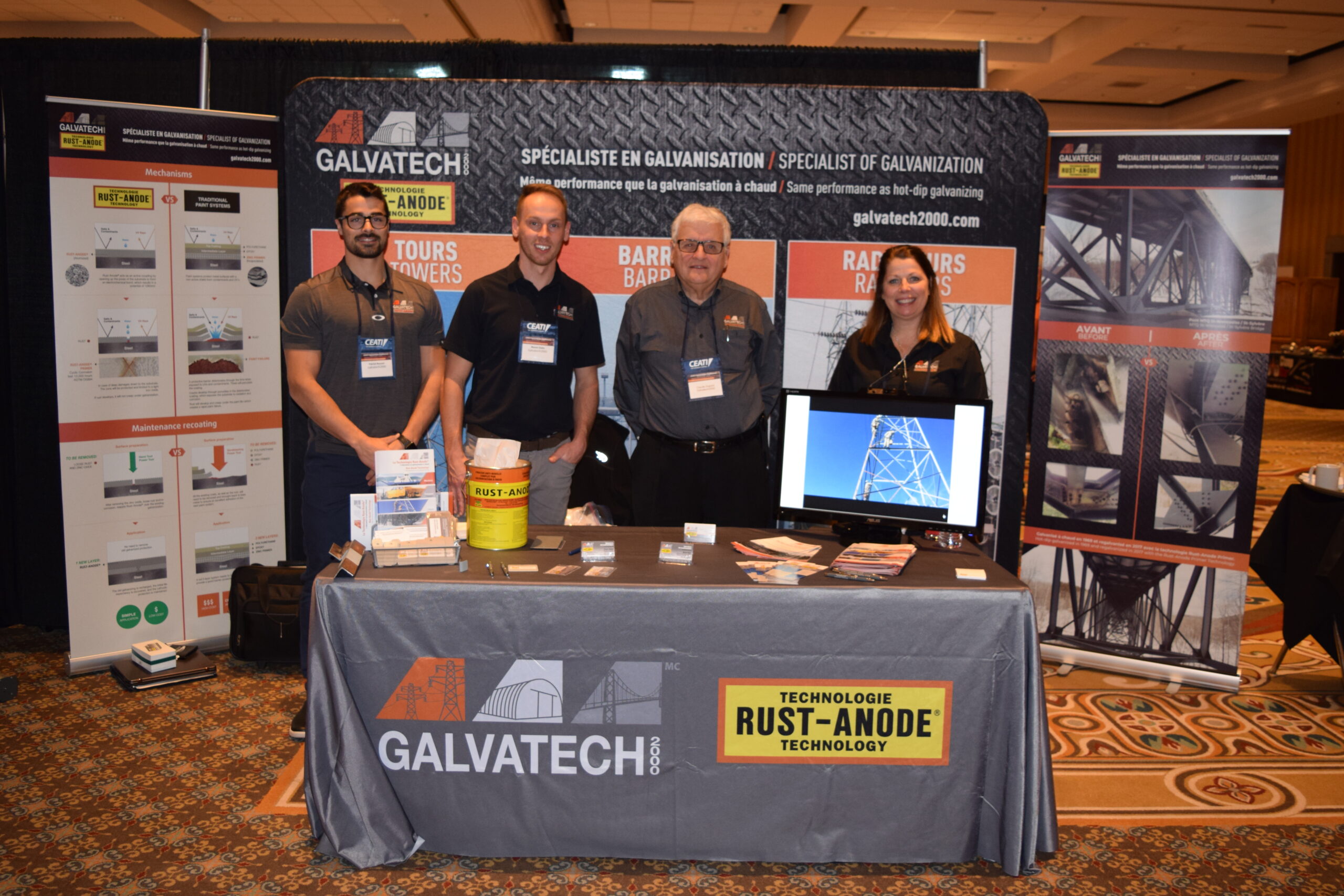
Quelques souvenirs et merci d’être venu nous voir au congrès du CEATI à Tucscon Arizona en novembre 2018. Some memories and thank you for coming to the CEATI congress in Tucson (Arizona) in November 2018.
New Promotional video for the Rust-Anode Technology Mono-component product An equal dry film thickness of Rust-Anode® Technology provides the same performance as hot galvanization and metallization 99.995% pure organic zinc Cathodic protection due to electrochemical bond with the metal (measurable [Ω resistance]) Dries quickly (hygro-reactive) in moist environments May be applied on non-friable rust, free […]
Consult our new theoretical coverage assessment guides to help you calculate the amount of product needed to complete your projects based on the selected product. To consult the theoretical coverage evaluation guide for the Rust-Anode Primer click here To consult the theoretical coverage evaluation guide for Rust-Anode click here